Showing posts with label Depression. Show all posts

Wednesday, February 18, 2009

No Problems Come Without Gifts

There are links between brain injury and depression.

This statement seems painfully obvious.  Of course there are links between brain injury and depression.   It is one of the most widespread challenges facing brain injury survivors.  Up to 77% of survivors are intimately acquainted with the crushing despair, the feeling all happiness has been sucked from the world as their lackluster days drag on endlessly.   Is it any wonder?

Brain injury capriciously robs survivors of intellect, social skills, physical abilities, and so much more, haphazardly taking a bit of this, a bit of that.  Every ‘given’ is thrown into question, always and forever loses all meaning.  Lifelong relationships crumble, your emotions are no longer your own – you’re not you anymore.  Every survivor I’ve ever met has struggled with depression.  We're mourning the loss of ourselves - how could we not?  

There are links between brain injury and depression – tell me something I don't know already!  

Brain injury can cure depression.

I did a double take when I read it, but it's true.  Studying Vietnam vets and other TBI survivors, Neuroscientist Michael Koenigs and his colleagues have discovered that when the part of the brain right behind the eyes (the ventromedial prefrontal cortex – VMPC) is damaged or destroyed it actually “cures” depression! 

In one extreme example mentioned in the study discusses a woman who had cured herself with a gunshot to the head.   Through some miracle, her attempt at suicide not only failed, but also managed to neatly destroy her VMPC, after which all depression vanished.  According to her neropsychologist, “she never shows distress, worry, or anger.”


At first glance this blissful state of perpetual calm,  sounds quite nice.  After all, brain injury damaged a part of my brain proven to cause depression, I must admit, I felt a bit like I’d gotten the short end of the brain injury stick.  Until I read the fine print….

That’s right, there’s always a hidden cost.  Don’t go signing yourself up for a 1950s-style lobotomy too quickly.  Though taking out the VMPC does help depression, there are serious social and cognitive deficits.  Survivors frequently will lack empathy, compassion can’t interpret nonverbal cues, see connections, and the list just keeps going.

This is not to say that one type of injury is better or worse than another - all deficits are hard – brain injury is not for the weak of heart.  Over the years I have become accustomed to, learned to regulate, and even come to see some positives in these challenges.  Trade mine for a new set?  No thanks. 

Heightened emotions may have their drawbacks, and I am sure there are those who would be happy to waive empathy and insight goodbye along with depression, but not me.  I was, thankfully able to balance my brain chemistry out, and bid the days of clinical depression farewell years ago.  Though I have moments I am grateful that I’m able to experience the entire range of human emotions – the joy wouldn’t be so sweet if I didn’t know the salty taste of tears…

It is true, everything comes at a cost, but no problem comes without bearing gifts.  It is our duty to uncover them….


The Links Between Brain Injury and Depression http://insciences.org/article.php?article_id=2359

Neuroskeptic: No Ventral Prefrontal Cortex? No Problem! http://neuroskeptic.blogspot.com/2008/12/no-ventral-prefrontal-cortex-no-problem.html


Traumatic Brain Injury and Depression http://74.125.47.132/search?q=cache:n04aY9dA_28J:www.freddhaas.com/CM/Articles/


Deficits in Social Knowledge Following Damage to Ventromedical Prefrontal Cortex http://neuro.psychiatryonline.org/cgi/content/full/17/1/66


CNS Spectrums: Depression, Anhedonia, and Psychomotor Symptoms:  The Role of Dopaminergic Neurcircuitry


Monday, February 9, 2009

I've Gotta Make Like Elvis Costello and Get Happy! (Computer problems part I)


It was still dark when I awoke, drenched in sweat, gasping for air.  I reached for my cell –  5:30 – not again, I groaned.  Flinging the covers off I rolled out of bed to do damage control. 


Giving the radiator a dark look, I kicked myself for forgetting to leave the window open.  Flipping the light switch I flung the dripping window wide and tried to shoo the thick cloud of steam out, and surveyed my room, the sauna. Both mirrors fogged over, the walls dripping with condensation, it looked like I’d just taken a shower.  When I looked over at my MacBook, my heart leapt to my throat.  The laptop was covered with water droplets.

My Macbook is 10 months old, still under warranty, but I do not have the best luck with electronics (or warranties for that matter).  Over the past few months it’s been running slower, taking ages to start up, programs have been spontaneously shutting down, part of the plastic started peeling up for no reason, and various other annoyances, but I need my computer, so I put off taking it in.  I may not be great with electronics, but I am decidedly dependant on them, and losing my computer was not a thought I relished.  Now I may not be the most computer savvy person in the world, but I’m pretty sure that a sauna is not the best place to leave a computer.  It may have been having problems before, but with this incident I was more than a little worried that under warranty or not it a) wouldn’t work and b) they’d refuse to fix it.

Too stressed to sleep I went into the kitchen to make some snickerdoodles, before laying down and trying to slip in another few minutes of rest before my alarm.
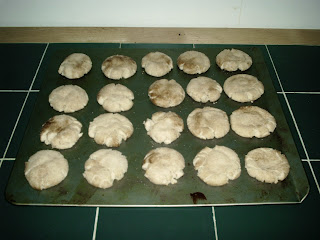
Snickerdoodles
Ingredients:

1 1/2 c Sugar
1 c. Shortening
2 Eggs (I use egg replacer)
1 T. Vanilla
3 c. Flour
1/4 t. Salt
1 t. Baking Soda

1T Ground Cinnamon
1/2 c. Flour

  • Preheat Oven to 375
  • Mix cinnamon and 1/2 c. sugar in bowl and set aside
  • Mix shortening, sugar, eggs, and vanilla.  Stir in dry ingredients until well mixed
  • Form dough into balls and roll in cinnamon/sugar mixture
  • Place balls on pan 2-3 in apart and slightly flatten with hand
  • Bake for 8-10 min

Hours later, down at the library, hoping against hope, I took my computer out, and turned it on with crossed fingers.  It started up alright, maybe….Things did not look promising when I turned the computer.  Steam had gotten under the screen, and one corner just looked wrong.  But maybe….

Then I started typing.  The “t,” “m,” and “arrow” keys didn’t work.  

Hours later, down at the library, hoping against hope, I took my computer out and turned it on (being careful to keep my fingers crossed).  My heart caught as the screen flickered on; steam had gotten under it and one corner just looked wrong.  Maybe it would still work though ... if that was all that was wrong, maybe I could live with it....  

Then I started typing.  The "t," "m," and "arrow" keys were all sticking.  I couldn't write like that.


With a sinking feeling I put away my notebook and headed to the Mac store.  Why did this have to happen now?  Right when things were moving forward so well.  It felt as if I had the wind knocked out of me.  I was lost without my computer – I couldn’t blog, give advice, network, volunteer, keep in touch with friends or anything even my schedule was online!  Maybe they could fix it there though, they did just give me a new ipod when my last one broke.  I wasn’t happy about losing a day of work it could be worse.  Mac’s known for their great warranty – they’ll fix it and make it all better.

The “geniuses” at the Mac store took a look at it – corrosion was causing all the problems I’d been experiencing.  It would be $800 to fix.  I was gutted.  The computer wasn’t even a year old, it’s not like this was my fault.  But I was too tired to argue.  I took it home to transfer the last two weeks’ work on my external hard drive. 

I turned opened the book and was greeted with a strange looking circle in three sections.  What was with Mac and their cute icons!?  Was this their version of a biohazard symbol or something?   I had lost two (productive) weeks of work, would have to get them to fix the computer, and knowing my luck, would probably have to replace it again in two months.  I couldn’t live without a computer for the week they’d told me it would take to fix it. 

Growing more panicked by the second, I called J for support and to see if maybe he had an extra laptop I could borrow in the meantime.   No answer.  I left a tearful message apologizing for bothering him at work and telling him the situation.  Okay, I was on my own, I took a deep breath, put my external hard drive in my computer bag along with the Mac and headed back to the store.  Maybe they could rescue the files.

When I got the computer back to the Mac store I found my answer.  Turned out their geniuses hadn’t taken my computer out of target disc mode.  They helped save the files, and I went back to the library to see if I could get any work done, or at the very least find a plane ticket out of the country while they fixed my computer.

Taking the computer apart and putting it together again had fixed some problems, but the “arrow” and “m” keys still didn’t work.  I had saved the files, most of the keys worked, but I wasn’t any further from tears.  Like a broken record, my mind kept going back to the dull, beaten feeling that it had happened again – right when I needed it most a piece of technology it had broken.  Again.   I had to take care of everything by myself.  Again.  In my mind the world piled sandbag after sandbag of unfairness on my shoulders weighing me down, and each new insult added to the prodigious weight.

That evening at the meeting, J tried to hug me, and I took a reflexive step back, “I will cry if you hug me.  Do not be nice to me.” I told him.  It was true, when I am upset I can keep a brave face if I have someone or something to rally against, but if people are nice to me, it’s too much.   And I did not want any part of crying in public.


Poor J couldn’t understand it.  He apologized trying to understand why I was so upset and tried his best to understand.   He hadn’t gotten my message until ten minutes before.  Why was I so upset?  Was it the money?  Was it that he hadn’t called me back?  Was it the time?  But his look told me he thought I blamed him.

“No, it’s not that.  Don’t worry it’s nothing to do with you,” I told him.  Some part of me knew I was being silly, but I couldn’t see the bright side to save my life.  My mind just kept coming back the negatives of the emotion-fraught day.  I just wanted to go home and mope, sinking into a self-pitying slump.  

Depression is one of the most common psychiatric complications in brain injury.  I am thankfully not depressed, but when I am fatigued, the stresses, and complications in life can become overwhelming.  Being faced with losing my computer was a huge deal.  That combined with lack of sleep the night before, my mind the Mac geniuses telling me the warranty wouldn’t cover it, feeling like I was having to take care of things alone, and my brain replaying the day’s worst highlights on a loop of perseveration was too much.  When J called later, I tried to explain what I was going through, but in a hollow sort of way; I didn’t want to talk on the phone.


Just as there are numerous factors causing it there are many ways to break free from depression and perseveration’s self-perpetuating loop.  As with many TBI-related traps, is important survivors let their loved ones know about this.  Self-awareness can be extremely difficult, especially at times like this, so their help and guidance can be invaluable. 
  • The number one thing is to make sure you are well rested – a good night’s sleep, or satisfying nap works miracles.  Fatigue is at the root of so many tbi-related problems.  Though we may not like to admit it, survivors do need more sleep, and we pay for it if we don’t get enough.
  • Companionship, human or animal is also extremely therapeutic for me in cases like this
  • In the same vein, human touch also works wonders  Though I pushed J away when he tried to give me a hug, that was solely because I did not want to cry in public.
  • A good cathartic cry is in my experience, an excellent release for tension, stress and way out of the trap.
  • Finally, just as I spoke of in the last entry on agitation, I find that distraction works wonders.  An outside party must assist with this, but distraction, (or if you are caught in an actual depression I find travel works wonders) is a good ace to keep up your sleeve

However keep in mind, sleep is paramount.  The other three suggestions will no more effective than band aids on a shark bite if you are not well rested.  However they do work as excellent aids to bolster you when sleep isn’t enough….

Wednesday, January 14, 2009

Animal Assisted Therapy


It was love at first sight.   I hadn't wanted a dog, my apartment didn't even allow them, but somehow I knew I had to have the little Jack Russell puppy.   

Last night was my first time volunteering as a dog walker with NYC Animal Care and Control. http://www.nycacc.org/contact.htm I wanted to volunteer and miss being around animals, so this seemed ideal.   I wasn't sure what to expect, but I do love animals and am generally good with them, so I wasn't worried.

It was dark before we started walking the dogs, and just to be on the safe side the project leader had the volunteers pair off in teams of two.  I was relieved. We were in the low hundreds - so close to the UES, but so far.   I have no experience with that area, and East Harlem looks pretty sketchy, especially at night.  

My partner D, an energetic Lebanese girl, did not have any experience with large dogs and was a little scared.   I couldn't blame her - I could easily see a large dog overpower the waify girl, who could easily have passed for a model, and run away.  The fact that 90% of the dogs there were pit bulls didn't ease her mind in the slightest.  The team leader suggested that we start out by walking a tan medium-sized pitbull mix who was curled up on her pillow in the far corner of her cage.  I took one glance at the poor thing shrinking back from our gaze; pinned ears, clamped tail and asked if we could walk another dog.  Any other dog.  

The first dog we walked was a puppyish chocolate pit bull with white markings.  Self assured and curious about everything, this dog was a charmer.  We put him back in his cage and asked a petite hispanic Animal Care employee which dog we should walk next.  The wiry woman flashed a smile and immediately suggested we take out the first dog our team leader suggested.  

"But she's so scared," I protested "Are you sure she's safe to take out?" 

The employee reassured me that this dog was gentle - she was just scared of the other dogs, and would be fine once we got her out.  With a sinking feeling, I watched the poor broken thing flinch as the collar slid over her head.   That walk nearly broke my heart - the poor thing struggled against the leash, her ears and tail pinched close to her body.  As soon as we got back the employee realized her mistake - this wreck of a dog had experienced unspeakable abuse and cruelty.  Without intense rehabilitation she wouldn't have a chance at being adopted.

Next we walked Brodie, a friendly-looking Rottweiler-mix who enthusiastically who wagged his feathered tail the entire route.  But the last dog we walked - he was the best.  Pepper was a  black 1 1/2 year old medium-sized lab mix.  He was soft, playful, eager to please, and the first really people-focused dog we'd met that night.  It was Pepper who reminded me of my little Jack Russell - my Klaus.  It was pepper who reminded me of  that wonderful pivotal moment in my recovery.  The day I met Klaus.


Though I had had a good recovery and was on the right track, even years after my brain chemistry was seriously affected.  Just like many survivors, I would go through periods of deepest depression, and indeed despair, and nothing would seem to help.  My diminished social skills, feelings of isolation, and tendency to turn inward only served to exacerbate matters.  Klaus changed all of that - having a being that loved me so completely, who I could love helped immeasurably.  Being miserable around such a happy, loving, snuggley puppy was all but impossible - if I was sad, he would snuggle with me until I was happy again.   

I truly view getting him as a turning point in my recovery.   This is not to say I did not continue to struggle with depression, or that animal therapy is the magical miracle cure, but I definitely think that it is a powerful weapon in the therapy arsenal.  Being able to develop a relationship with an animal is an excellent step towards rebuilding social skills and developing relationships with people, and I am not alone in this view.

The therapeutic, healing, and calming benefits of animal contact are widely acknowledged.  Today many hospitals and assisted living facilities have programs for dogs to visit the patients and residents.  This is a form of Animal Assisted Therapy.   This type of therapy is wonderful for TBI survivors, including encouraging empathy, socialization, decreasing stress, as well as many other psychological and physiological benefits.   http://bettyclooneyfoundation.org/servicesAnimal.html

I recommend getting an animal of your own so that you can develop a special bond.   However, if you are not able to have one, there are always opportunities.   For example, you can always volunteer at animal shelters, participate in Animal Assisted Therapy programs in your area, or play with friends' animals.   As with any type of therapy, this is not the answer for everyone, but in my humble opinion, it can't hurt to try.   

As always, I would love to hear any questions, comments, or stories you have...